
 Tools
Tools Tools
Tools


Callery, Simon (2003) Segsbury Project. [Show/Exhibition]
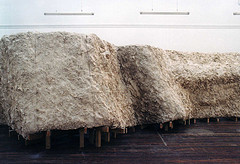
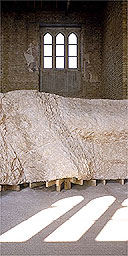
![[img]](https://ualresearchonline.arts.ac.uk/1799/1.haslightboxThumbnailVersion/Callery_Segsbury_lg.jpg) Callery Segsbury Project 1 (Downl ... 
| ![[img]](https://ualresearchonline.arts.ac.uk/1799/6.haslightboxThumbnailVersion/Callery_segsbury_1.jpg) Callery Segsbury Project 2 (Downl ...
| ![[img]](https://ualresearchonline.arts.ac.uk/1799/11.haslightboxThumbnailVersion/Callery_Segsbury_2.jpg) Callery Segsbury Project 3 (Downl ...
|

| Type of Research: | Show/Exhibition | ||||||||
|---|---|---|---|---|---|---|---|---|---|
| Creators: | Callery, Simon | ||||||||
| Description: | The 'Segsbury Project' was a cross-disciplinary practice-based contemporary art project organised by the Laboratory, Ruskin School of Drawing & Fine Art, University of Oxford in collaboration with the Institute of Archaeology, University of Oxford and English Heritage. From 1996-2003 Callery worked as a seasonal resident artist alongside archaeologists from the University of Oxford on two major excavations at Segsbury Camp and Alfred’s Castle, Oxfordshire within the ‘Hillforts of the Ridgeway’ Project of the Institute of Archaeology and Pitt Rivers Museum, Oxford. The project was conceived by The Laboratory at the Ruskin School of Drawing and Fine Art with support from English Heritage and the Henry Moore Foundation. Callery used this opportunity to address how contemporary painting can respond to landscape accessed through the experience of archaeological excavation. The research method created an environment for the artworks to reflect the process of excavation, and for completed artworks to act as a register to a landscape perceived as multi-dimensional, and for the material character of excavation sites to inform the ambitions of a contemporary painting practice. This cross-disciplinary, collaborative project culminated in 2003 with two exhibitions, at Dover Castle (1.04-1.08.2003) and the Storey Institute (6.09-15.11.2003) and the publication of a book, The Segsbury Project: Simon Callery (ISBN 0953852520), documents Callery’s overall project output. It includes full-colour reproductions with essays by Michael Archer, Tracey Chevalier and David Miles and a foreword by Paul Bonaventura, Miriam Levin and David Thorp. Callery contributed a chapter, ‘Segsbury Project: art from excavation’ (pp.63-78) to ‘Substance, Memory, Display, Archaeology and Art’ (ISBN1-902937-24-4) published by the McDonald Institute for Archaeological Research, Cambridge University, 2004 and a chapter to (pp.32-41) ‘Segsbury Camp, Monograph 61’, Institute of Archaeology, University of Oxford, ISBN 0-947816-68-2, 2005. He presented at the ‘Object-Excavation-Intervention, Dialogues between Sculpture and Archaeology conference at the Henry Moore Institute, Leeds, 2004. The project was the topic of an MPhil dissertation (Cameron, Cambridge); and the subject of the ‘Meaning, Mapping and Making of Landscape’ forum, Royal Academy of Arts, London, 2003. |
||||||||
| Other Contributors: |
|
||||||||
| Additional Information (Publicly available): | Simon Callery was the AHRC Research Fellow in Creative and Performing Arts at UAL. |
||||||||
| Your affiliations with UAL: | Other Affiliations > RAE 2008 Colleges > Wimbledon College of Arts |
||||||||
| Date: | 2003 | ||||||||
| Funders: | English Heritage, Henry Moore Foundation | ||||||||
| Related Websites: | http://www.wimbledon.arts.ac.uk/41829.htm, http://www.guardian.co.uk/artanddesign/2003/apr/26/art.artsfeatures2, http://www.contemporary-magazines.com/reviews52_1.htm | ||||||||
| Related Websites: | |||||||||
| Related Publications: | Chapter in ‘Segsbury Camp, Monograph 61’, (pp.32-41), Institute of Archaeology, University of Oxford (2005). ISBN 0-947816-68-2., "The Segsbury Project: Simon Callery" By Michael Archer, Tracy Chevalier, and David Miles, Illustrated by John Riddy and Andrew Watson, Edited by Paul Bonaventura. (ISBN 0953852520), ‘Segsbury Project: art from excavation’ In ‘Substance, Memory, Display, Archaeology and Art’ (pp.63-78), published by the McDonald Institute for Archaeological Research, Cambridge University, 2004. (ISBN1-902937-24-4), http://www.tate.org.uk/whats-on/tate-britain/exhibition/art-now-simon-callery | ||||||||
| Locations / Venues: | Location From Date To Date Dover Castle, Dover, kent, U.K. 1 April 2003 1 August 2003 Storey Institute, Lancaster, U.K. 6 September 2003 15 November 2003 |
||||||||
| Date Deposited: | 27 Nov 2009 19:27 | ||||||||
| Last Modified: | 19 Feb 2026 10:30 | ||||||||
| Item ID: | 1799 | ||||||||
| URI: | https://ualresearchonline.arts.ac.uk/id/eprint/1799 | ||||||||
| Licences: |
|
Repository Staff Only: item control page | University Staff: Request a correction