
 Tools
Tools Tools
Tools


Hodes, Charlotte (2010) Closely held secrets. [Show/Exhibition]
![[img]](https://ualresearchonline.arts.ac.uk/2643/1.haslightboxThumbnailVersion/CF001854.jpg)
| Type of Research: | Show/Exhibition | ||||||||||||||||||||
|---|---|---|---|---|---|---|---|---|---|---|---|---|---|---|---|---|---|---|---|---|---|
| Creators: | Hodes, Charlotte | ||||||||||||||||||||
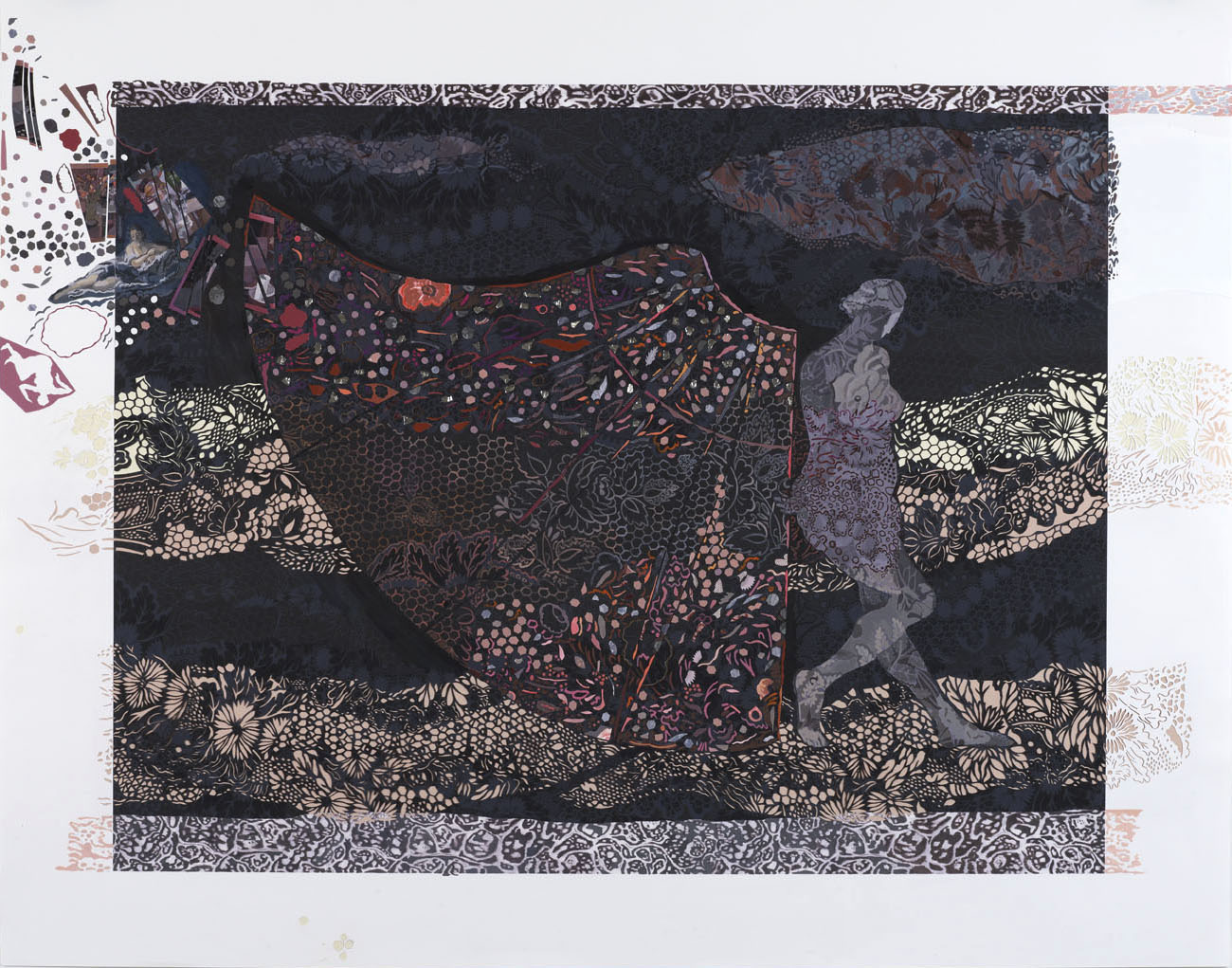
| Description: | This group exhibition was an artistic collaboration between visual artists and a skilled digital embroidery technician who translated and transformed a series of original artworks into a collection of digitally embroidered artefacts. The project explored the secret relationship between the maker and technician, revealing the nature of the hidden exchange or dialogue between the originator of an idea and the agent of interpretation. |
||||||||||||||||||||
| Other Contributors: |
|
||||||||||||||||||||
| Additional Information (Publicly available): | Artist Statement The challenge of how to use the papercut as a starting point for a digital embroidery centred on combining digital printing with digital embroidery to articulate the layered quality of collage. Tony suggested the use of appliquéd shapes which would not only overcome the practical problem of the embroidery being too large for the machine bed but would enhance the fragmented layered quality of collage. In addition, we were acutely aware of the embroidery threads being my drawing tool, equivalent to the cut lines of the scalpel blade in the papercuts. These threads weave a complex, intricate layer across the surface, holding together the digitally printed areas, pattern and shapes. The sequence of six papercuts ‘Waves’ from which the embroidery is made, each depict a silhouetted female figure juxtaposed against diagrammatic representations of skirts. The skirts echo and define the femaleness of the figure. They coexist with elements that, over decades, have been represented and re- presented within the fine and decorative arts; drapery, cloth, ornament and pattern. The horizontal panelled compositions suggest an undulating movement, continuous pattern and time passing. The tiny floating figure, a celebration of the art history from which it is sourced (Venus 1754 by François Boucher from the Wallace Collection) , takes part in the new complex, layered narrative.’ |
||||||||||||||||||||
| Keywords/subjects not otherwise listed: | Embroidery, collage, papercut | ||||||||||||||||||||
| Your affiliations with UAL: | Colleges > London College of Fashion | ||||||||||||||||||||
| Date: | 2010 | ||||||||||||||||||||
| Related Websites: | http://www.ntu.ac.uk/boningtongallery | ||||||||||||||||||||
| Related Websites: | |||||||||||||||||||||
| Projects or Series: | Research Outputs Review (April 2010 - April 2011) | ||||||||||||||||||||
| Locations / Venues: | Location From Date To Date Bonington Gallery, London 29 October 2010 24 November 2010 |
||||||||||||||||||||
| Material/Media: | papercuts and embroidery | ||||||||||||||||||||
| Date Deposited: | 02 Mar 2011 09:59 | ||||||||||||||||||||
| Last Modified: | 19 Feb 2026 10:31 | ||||||||||||||||||||
| Item ID: | 2643 | ||||||||||||||||||||
| URI: | https://ualresearchonline.arts.ac.uk/id/eprint/2643 | ||||||||||||||||||||
| Licence: |

|
Repository Staff Only: item control page | University Staff: Request a correction