
 Tools
Tools Tools
Tools


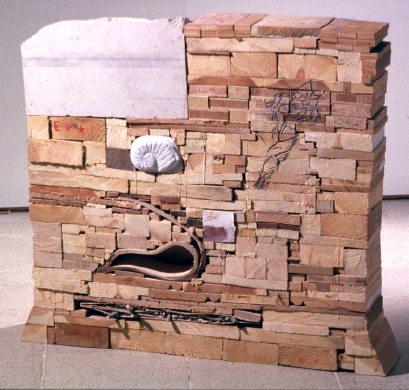
Coldwell, Paul (2010) Bouquet. [Art/Design Item]
![[img]](https://ualresearchonline.arts.ac.uk/5045/1.haslightboxThumbnailVersion/bouquet.jpg)
| Type of Research: | Art/Design Item |
|---|---|
| Creators: | Coldwell, Paul |
| Description: | Paul Coldwell uses everyday objects and materials to create sculptures that embody notions of experience, memory and the passing of time. Such ideas are recorded within the environment. The physical form and shape of the work seem to present a ‘slice’ of geological or archaeological evidence. The assembly of the bricks evokes strata, layers of rock or soil that have been laid down by natural forces. The title of this sculpture, 'Bouquet', suggests that it commemorates a particular occasion or feeling. The permanence of the natural materials is at odds with the momentary celebrations by which we, as humans, mark the passing of our lives. Similarly the solidity of the materials contrasts with the piece’s delicate construction. This addresses the divided nature of life: permanence is always in conflict with the fragility of life. |
| Your affiliations with UAL: | Colleges > Chelsea College of Arts |
| Date: | 2010 |
| Related Websites: | http://www.torre-abbey.org.uk/downloads/tamed-taco-catalogue.pdf |
| Related Websites: | |
| Related Publications: | http://www.torre-abbey.org.uk/downloads/tamed-taco-catalogue.pdf |
| Projects or Series: | Research Outputs Review (April 2010 - April 2011) |
| Locations / Venues: | Location From Date To Date Tamed: Art on the English Riviera, Torre Abbey, Torbay, Devon 6 July 2010 30 August 2010 |
| Material/Media: | wood, portland stone, marble, lead, paper and copper |
| Measurements or Duration of item: | 74 x 76 x 15cm |
| Date Deposited: | 10 Feb 2012 14:30 |
| Last Modified: | 19 Feb 2026 10:34 |
| Item ID: | 5045 |
| URI: | https://ualresearchonline.arts.ac.uk/id/eprint/5045 |
| Licence: |

|
Repository Staff Only: item control page | University Staff: Request a correction