
 Tools
Tools Tools
Tools


Ungerer, Sophie and Cridge, Nerma (2026) Intrinsically Interior: Towards the Collective Urban Space. In: Current Issues in Interiors [CII] 2026 Symposium, 15-17 April 2026, Izmir, Turkey.
![[img]](https://ualresearchonline.arts.ac.uk/27152/1.haslightboxThumbnailVersion/CII_2026_Figure%201_Ungerer_Cridge.jpg)
| Type of Research: | Conference, Symposium or Workshop Item |
|---|---|
| Creators: | Ungerer, Sophie and Cridge, Nerma |
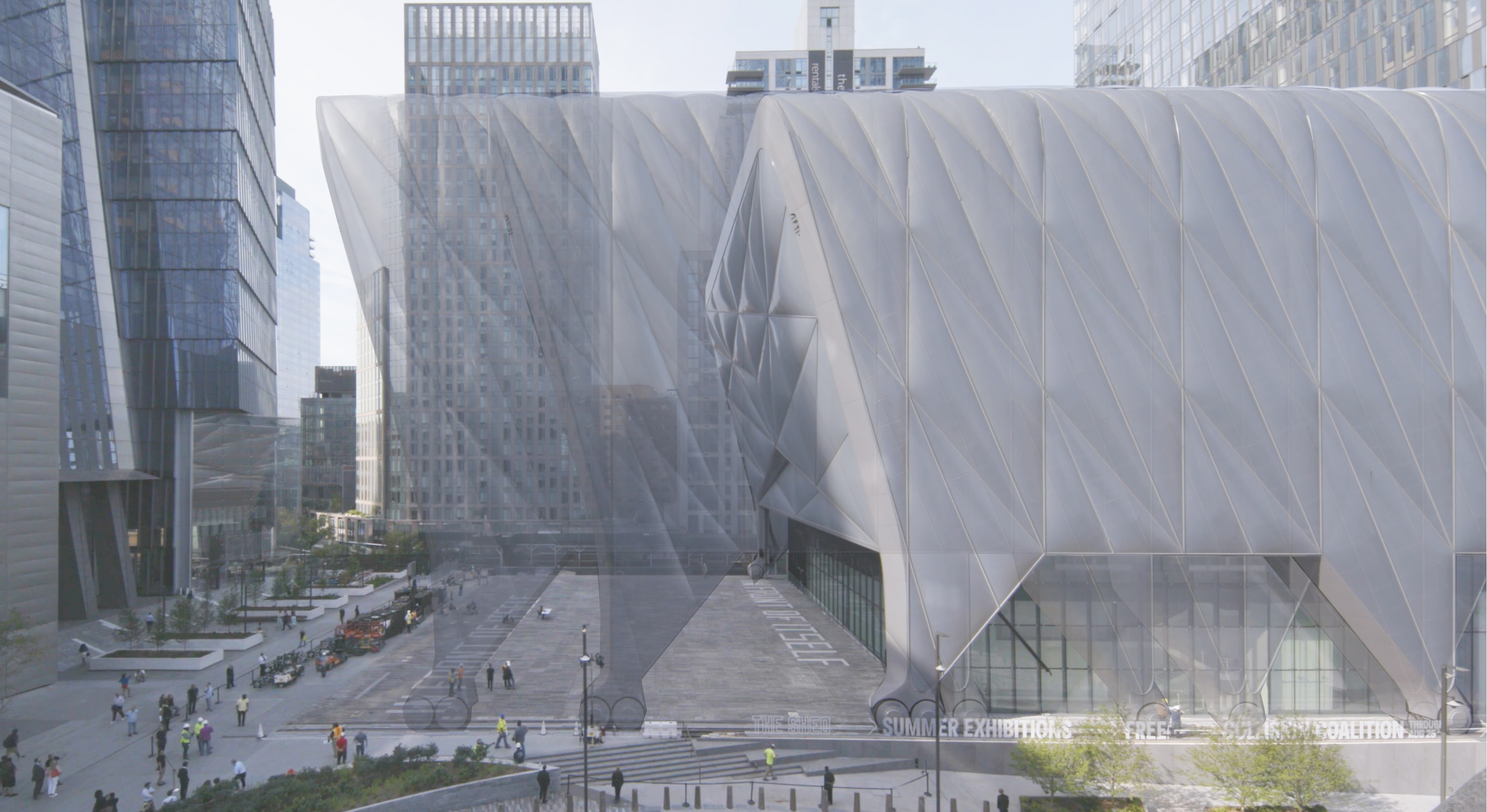
| Description: | As our cities grow, public space is becoming a precious commodity, offering opportunities for collective life and interaction. Large public spaces in our cities, such as open piazzas or public spaces in buildings, do not conventionally fall under the remit of interiors. Yet given their importance, over the last decades there has been an increased interest in understanding the occupation of public realm through a distinct urban interior approach. This paper builds on a previous investigation by the authors on ‘pivotal interiors’, which argued that the reading of interiors should not be confined by a focus on physically enclosed small spaces or professional boundaries of Interior Design. Instead, we proposed that the interior should be explored through its intrinsic qualities, such as detail, complexity, transformation and the immediate relationship between body and space. Utilising the notion of ‘pivot’ both as a conceptual and operative device, this paper sets out to explore how this method can be applied further and expand in scale to provide a more nuanced reading of the larger urban spaces from an interior perspective. The Shed, a large-scale public art venue designed by architects Diller and Scofidio + Renfro in 2019 as the final part of the High Line in New York, forms the focus of this exploration. The building features a dynamic transformative space, which can physically pivot from an outside public square into an enclosed public performance space, provoking discussion about the ‘interior’ qualities in both configurations – and the definition of public and collective space and interiors. A selection of other public spaces is debated to further explore nuances and pivotal aspects of their interior qualities, both of metaphorical and physical nature. All of them occupy, fold open and expand the boundary between the city and the interior, as temporary and permeable collective space. The series of case studies cover a range of scales, from Snøhetta’s rotating Book Pavilion, Carlo Ratti Architect’s proposal for the origami roof in AGO Modena Fabbriche Culturali, the large horizontal pivot of the Mercedes Benz Arena roof by HOK, and spaces with more complex sense of scale, a-scalar, virtual and hybrid spaces such as Aegis Hyposurface. One of the pertinent concluding questions in the paper will speculate whether an understanding of urban and public space through an interior perspective can enable designers to better design our cities – and to create more positive collective urban interiors. |
| Official Website: | https://cii.yasar.edu.tr/ |
| Your affiliations with UAL: | Colleges > Camberwell College of Arts |
| Date: | 17 April 2026 |
| Related Publications: | https://cii.yasar.edu.tr/wp-content/uploads/2026/04/CII2026-Abstract-Book.pdf |
| Event Location: | Izmir, Turkey |
| Date Deposited: | 23 Jun 2026 15:04 |
| Last Modified: | 23 Jun 2026 15:04 |
| Item ID: | 27152 |
| URI: | https://ualresearchonline.arts.ac.uk/id/eprint/27152 |
| Licence: |

|
Repository Staff Only: item control page | University Staff: Request a correction