
 Tools
Tools Tools
Tools


Cain, Ben (2024) At the End of Work. [Show/Exhibition]
![[img]](https://ualresearchonline.arts.ac.uk/25470/1.haslightboxThumbnailVersion/893A6853.JPG) Install shot (Download) 
| ![[img]](https://ualresearchonline.arts.ac.uk/25470/2.haslightboxThumbnailVersion/893A6942.JPG) Install shot (Download)
| ![[img]](https://ualresearchonline.arts.ac.uk/25470/3.haslightboxThumbnailVersion/893A6956.JPG) Install shot (Download)
|
![[img]](https://ualresearchonline.arts.ac.uk/25470/4.haslightboxThumbnailVersion/893A2413.jpg) Detail (Download)
| ![[img]](https://ualresearchonline.arts.ac.uk/25470/5.haslightboxThumbnailVersion/893A6920.JPG) Detail (Download)
| ![[img]](https://ualresearchonline.arts.ac.uk/25470/6.haslightboxThumbnailVersion/893A6924.JPG) Detail (Download)
|
![[img]](https://ualresearchonline.arts.ac.uk/25470/7.haslightboxThumbnailVersion/893A6808.JPG) Install shot (Download)
|

| Type of Research: | Show/Exhibition | ||||||||||||||
|---|---|---|---|---|---|---|---|---|---|---|---|---|---|---|---|
| Creators: | Cain, Ben | ||||||||||||||
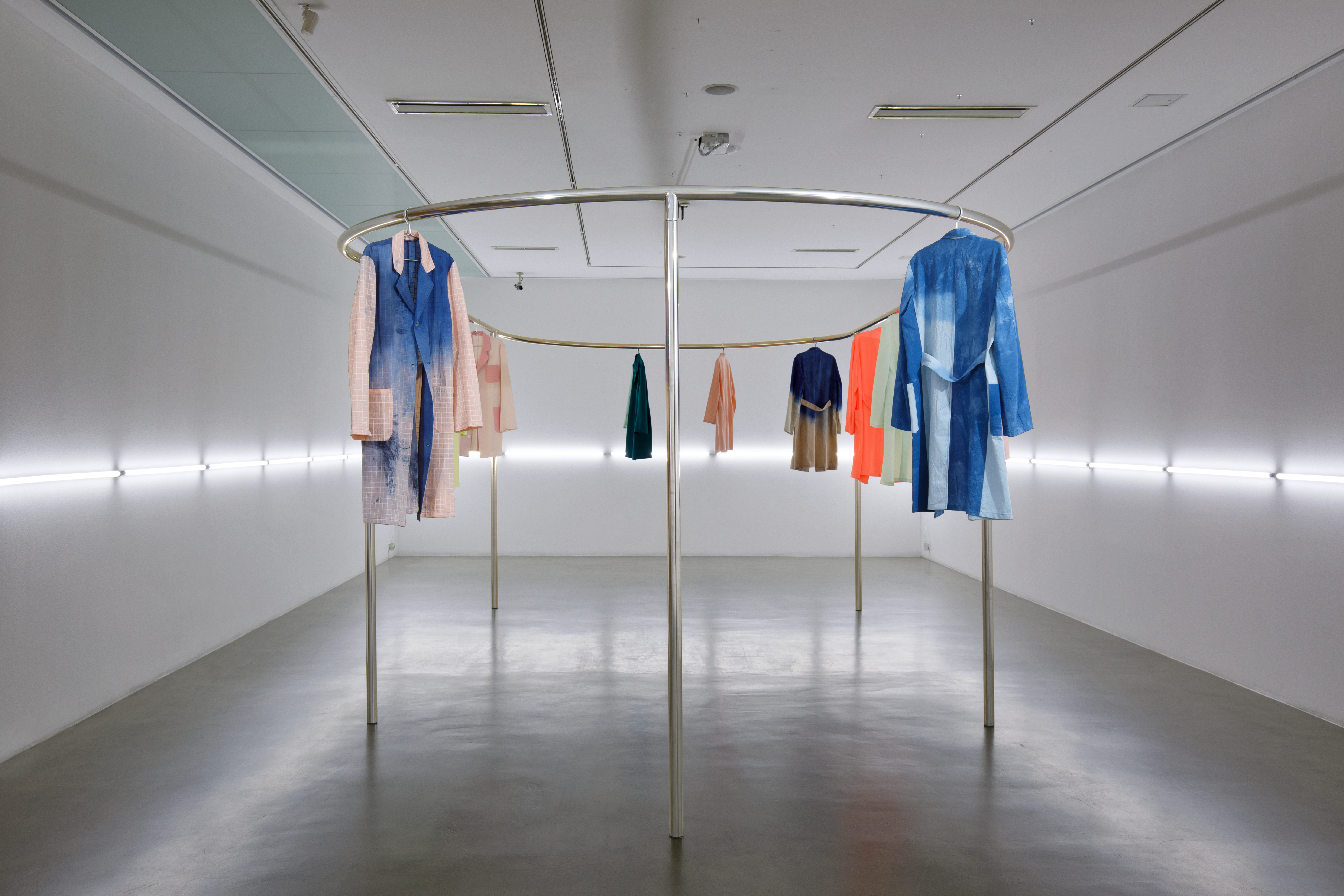
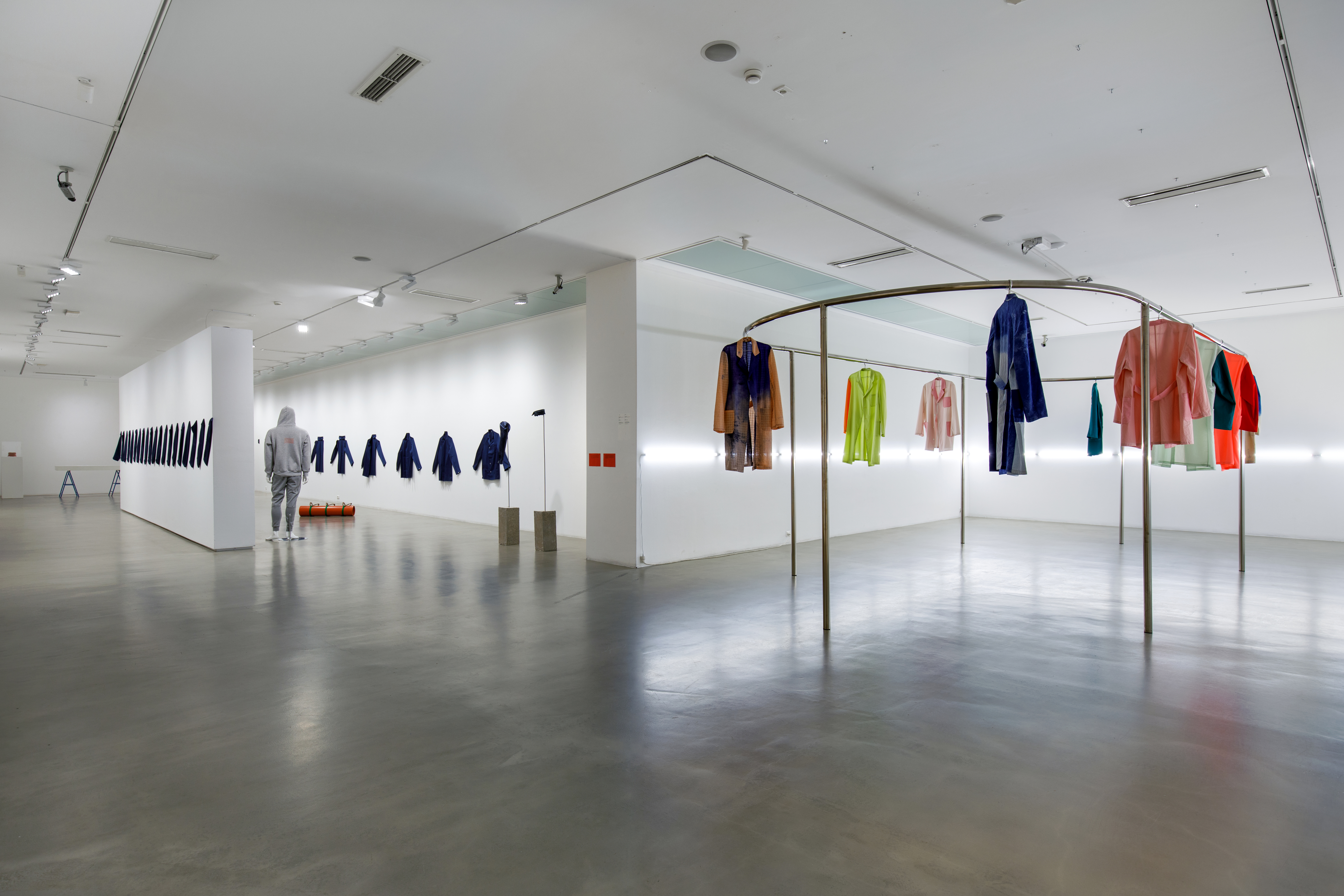
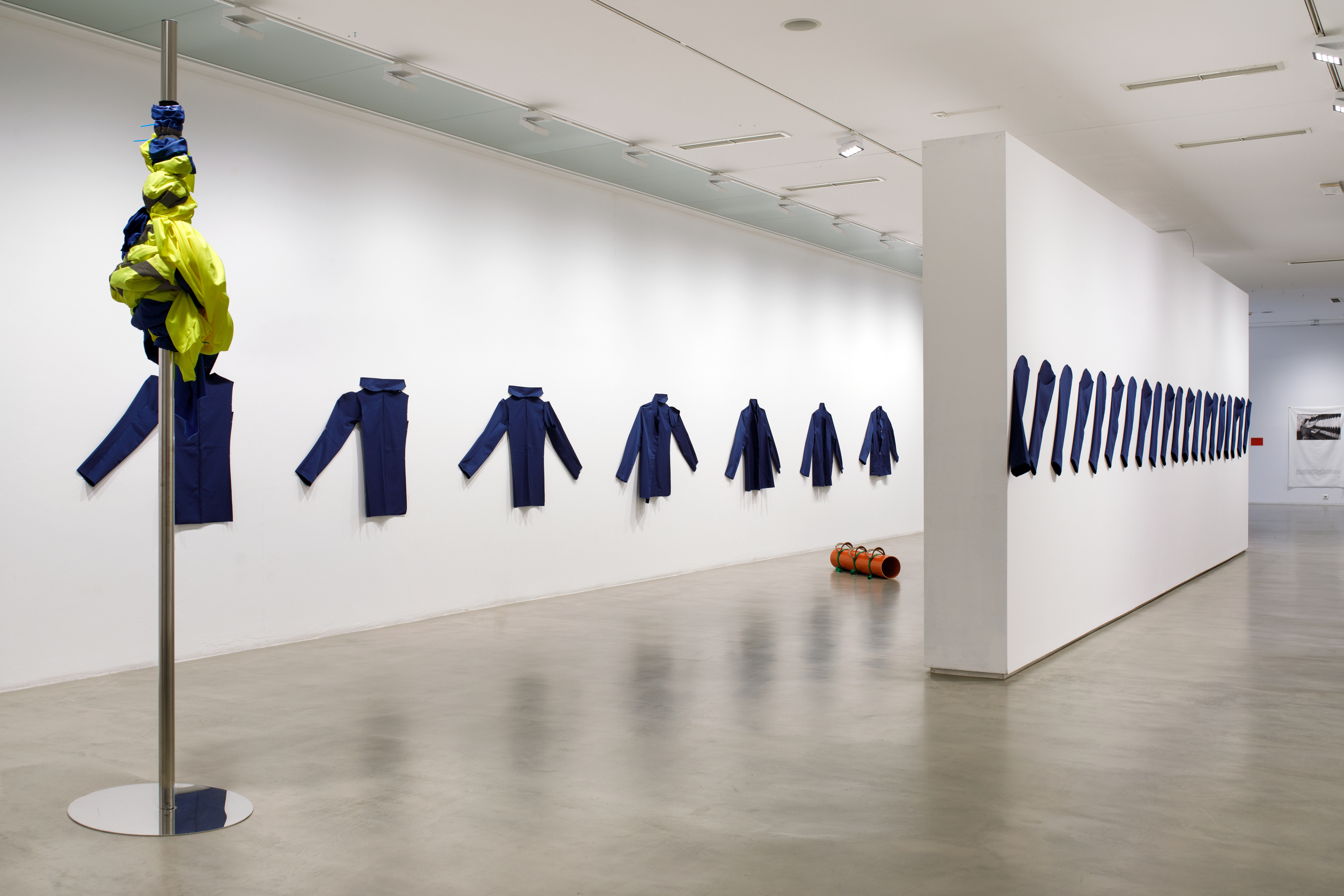
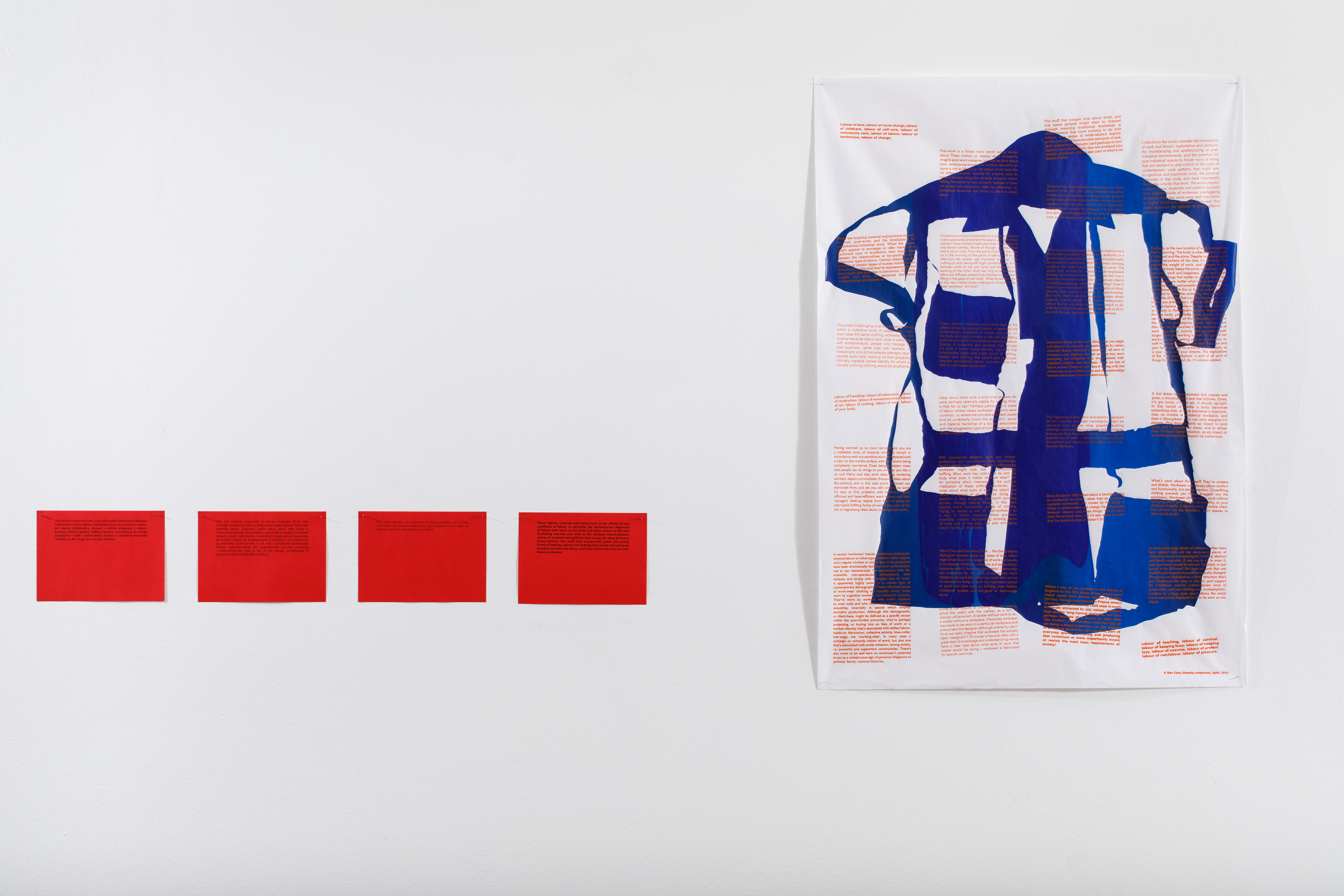
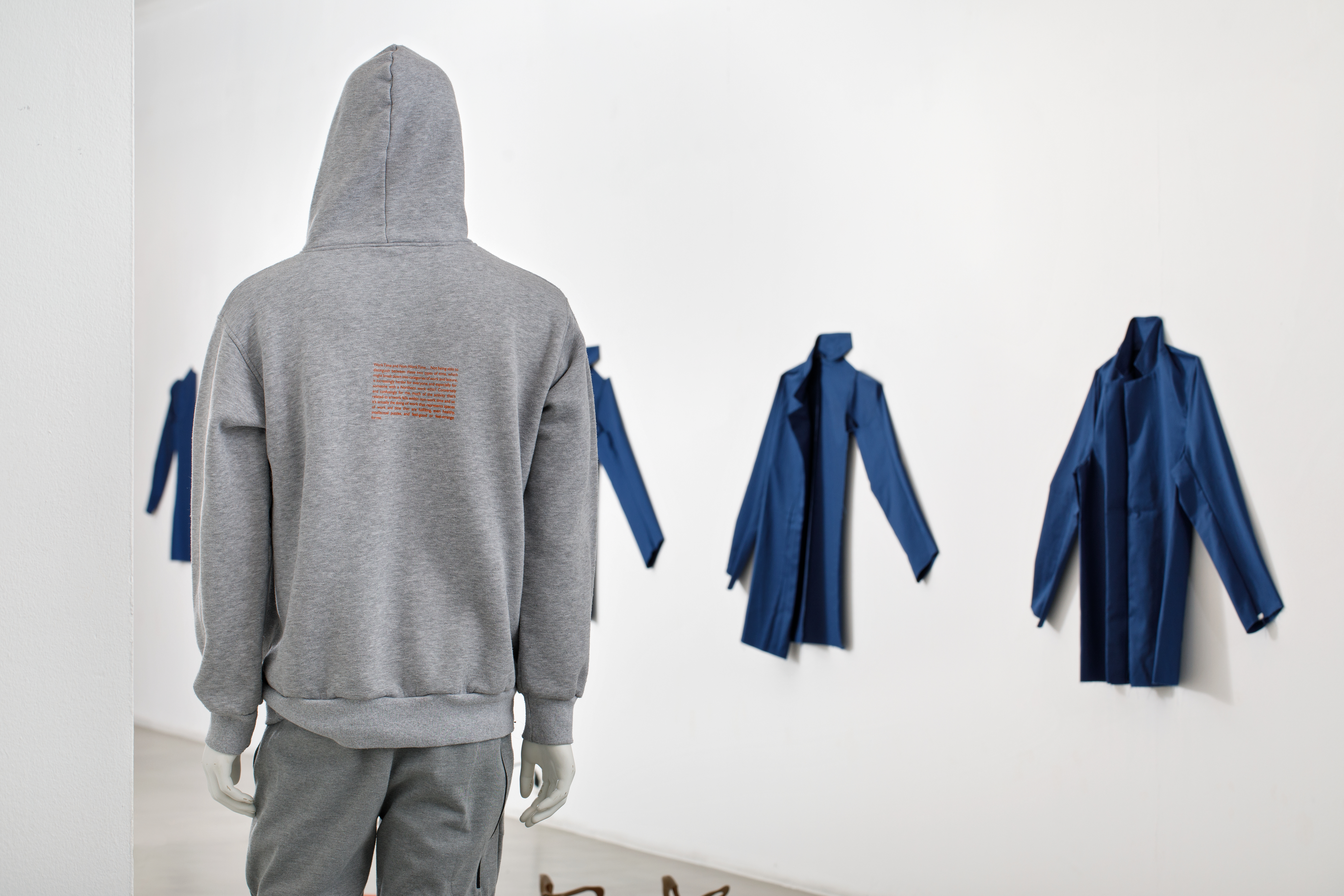
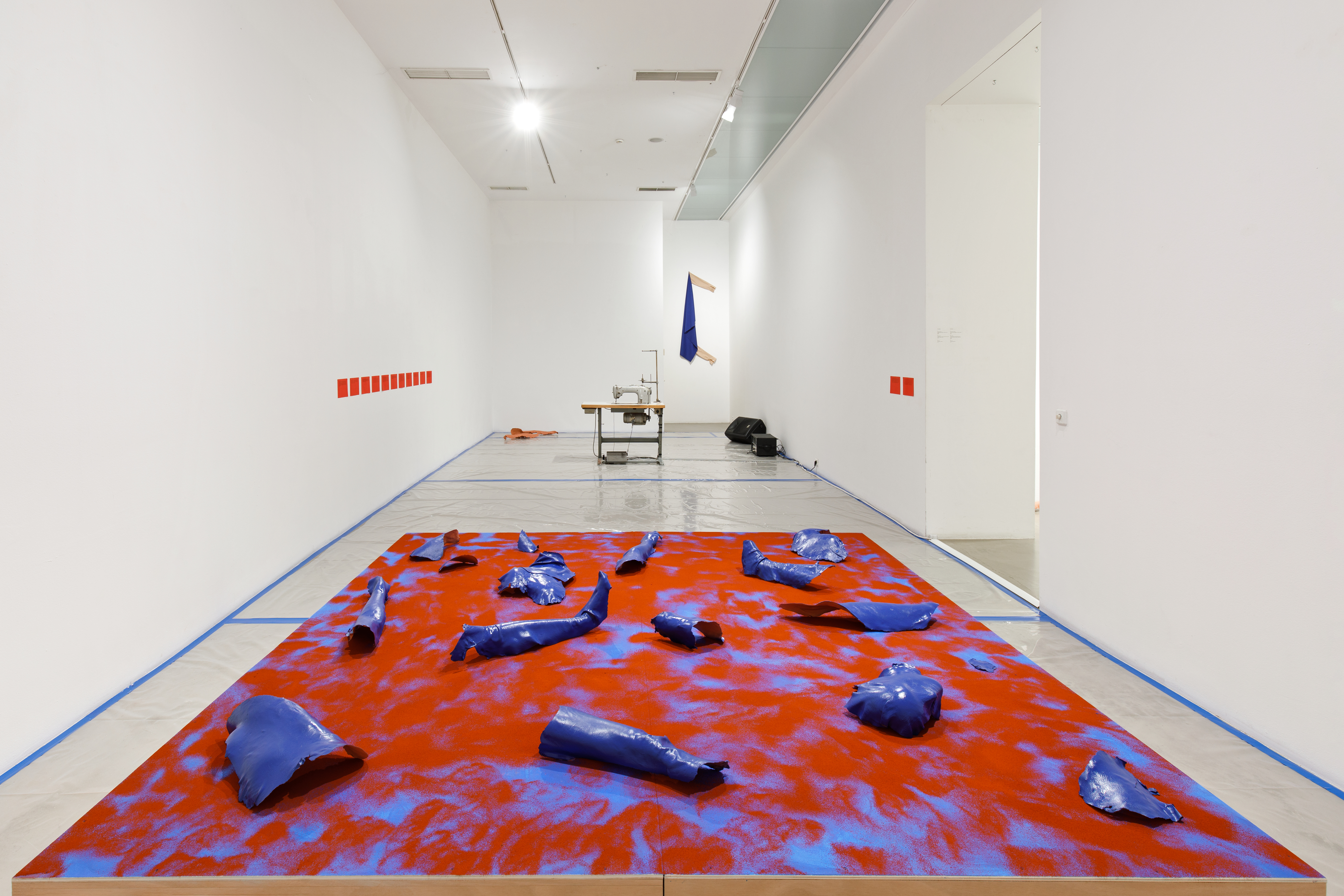
| Description: | Ben Cain is a multidisciplinary British artist whose practice focuses on the effects of changing work conditions on the contemporary individual. In the post-industrial era, human labour has transformed on many levels, and Cain specifically examines how these changes influence the human body, self-identity, and interpersonal relationships. His artistic work is characterised by a broad spectrum of media, encompassing installation, sculpture, photography, video, performance, text, and sound. In his first solo exhibition in Split, titled “At the Edge of Work,” he turns the exhibition space into a “pseudo-factory” using sculptural objects, spatial installations, textile works, and sound. The specific layout does not provide concrete depictions of post-work but invites the audience to reconsider what work means, looks like, and feels like in today’s world and, ultimately, explores the potential of the artist / artistic work in generating insights into key aspects of contemporary society. The exhibition space will act as a pseudo factory involving various types of production. The individual works and the environment itself all present forms of adaptation, digestion, and coping with a life-work situation in which ‘work’ is somehow everywhere and nowhere, omnipresent, and invisible. People talk about the ‘heart being taken out’ of things, out of work, meaning that there’s a lack of feeling or humanity. Perhaps there’s a vacuum in the gap between industry and post-industry, an enormous open empty space, a ruin, a sudden shift that left a huge amount of people feeling entirely lost, disenfranchised. However, that generation is fading, and new generations might find it hard to recognise any sort of ‘heart’ in spaces of industry. Some of the sculptural works explicitly look at the deconstruction of a clear or perhaps romantic notion of the ‘worker’, some present ‘work’ with a veneer of ‘leisure’, others set up situations where labour of some sort is latent or immanent. Most of the spaces and sculptures here assume the audience to be some sort of potentially active worker within a working environment. This exhibition is far from a comprehensive study of industrial and post-industrial work patterns and environments, but it does intend to raise questions about conditions of work that are ‘human’ (or humane), and desirable, and therefore there’s an invitation to think how and if we might work differently. The exhibition confesses to a confusion about which periods and forms of work are damaging or liberating in terms of the potential of individuals and communities to impact positively on one-another and their environment, i.e., to realise agency, social consciousness and fulfilment. Should we expect any of these things from our engagement with ‘work’? It's clear that work or labour is increasingly omnipresent in all our lives (automation hasn’t given us a post-work leisure utopia, and most of the ‘leisure’ activities we are pursuing are the work of ‘working-out’, bench-pressing, replacing for example die-casting), and so it feels necessary to continually ask how we used to work, how we work now, and how we want to work – these are some of the questions this exhibition wants to struggle with. The contemporary worker’s body is dispersed in actual space, virtual space, and in time, working on demand, over-time and with no set hours. Perhaps in the case of ‘industrial labour’, although often displaced, and travelling across borders to find work, the body is static. All the body’s moves happen in one small area, and in tight bond with its’s machine. But what about office-work, desk-based work prevalent since the mid 19thC, McDonald’s – is that industrial labour, service industry, or both and more? A clear idea of what work is, what it looks like and where it takes place has been dismantled and with it a coherent sense of self? But we ought to be very careful about a promoting a notion of the heroic dignified worker – it’s clearly the product of myth, nostalgia, and romance? There’s no denying that the material and spatial, sculptural in fact, characteristics of industrial labour are deeply impressive, attractive, phenomenal, even awesome, and these factors make it easy for that period of work to be aestheticized, smothered in nostalgia, exoticized and consequently monetarized through for example the hip re-branding of workwear by everyone from top-end fashion houses, to domestic-scale ‘artisan’ production houses, down to mundane hyper-conservative high-street stores such as Gap. The majestic sunlight on monumental structures and beautiful erstwhile ruddy-cheeked faces in the images of Tošo Dabac and Walker Evans is deeply captivating and persuades us of the dignity of that work -and not unreasonably- the euphoria of socialism and the familial support and comfort of work-place community. Everywhere we are surrounded by the contemporary lack of this type of work? This work, and that world, is omni-present in the landscape of many European countries, in cultural industries inhabiting ex-factory space ruins, and in the ‘chore jackets’ on everyone’s backs that are now cultural icons. The ruins of work are acutely visible. Faced with the constant presence of the signs of what work apparently once was before some workers became walking commodities and PR assistants to themselves, it’s hard not to think about the role of ‘work’ in our lives and our society, and with all this in mind, it’s hard for me not to make work about work. |
||||||||||||||
| Other Contributors: |
|
||||||||||||||
| Keywords/subjects not otherwise listed: | work, labour, post-work, leisure | ||||||||||||||
| Your affiliations with UAL: | Colleges > Central Saint Martins | ||||||||||||||
| Date: | 2024 | ||||||||||||||
| Related Websites: | https://www.galum.hr/en/exhibitions/exibition/1807/ | ||||||||||||||
| Related Websites: | |||||||||||||||
| Locations / Venues: | Location From Date To Date Museum of Fine Art, Split, Croatia 8 August 2024 29 September 2024 |
||||||||||||||
| Date Deposited: | 15 Jan 2026 16:56 | ||||||||||||||
| Last Modified: | 15 Jan 2026 16:56 | ||||||||||||||
| Item ID: | 25470 | ||||||||||||||
| URI: | https://ualresearchonline.arts.ac.uk/id/eprint/25470 | ||||||||||||||
| Licences: |
|
Repository Staff Only: item control page | University Staff: Request a correction